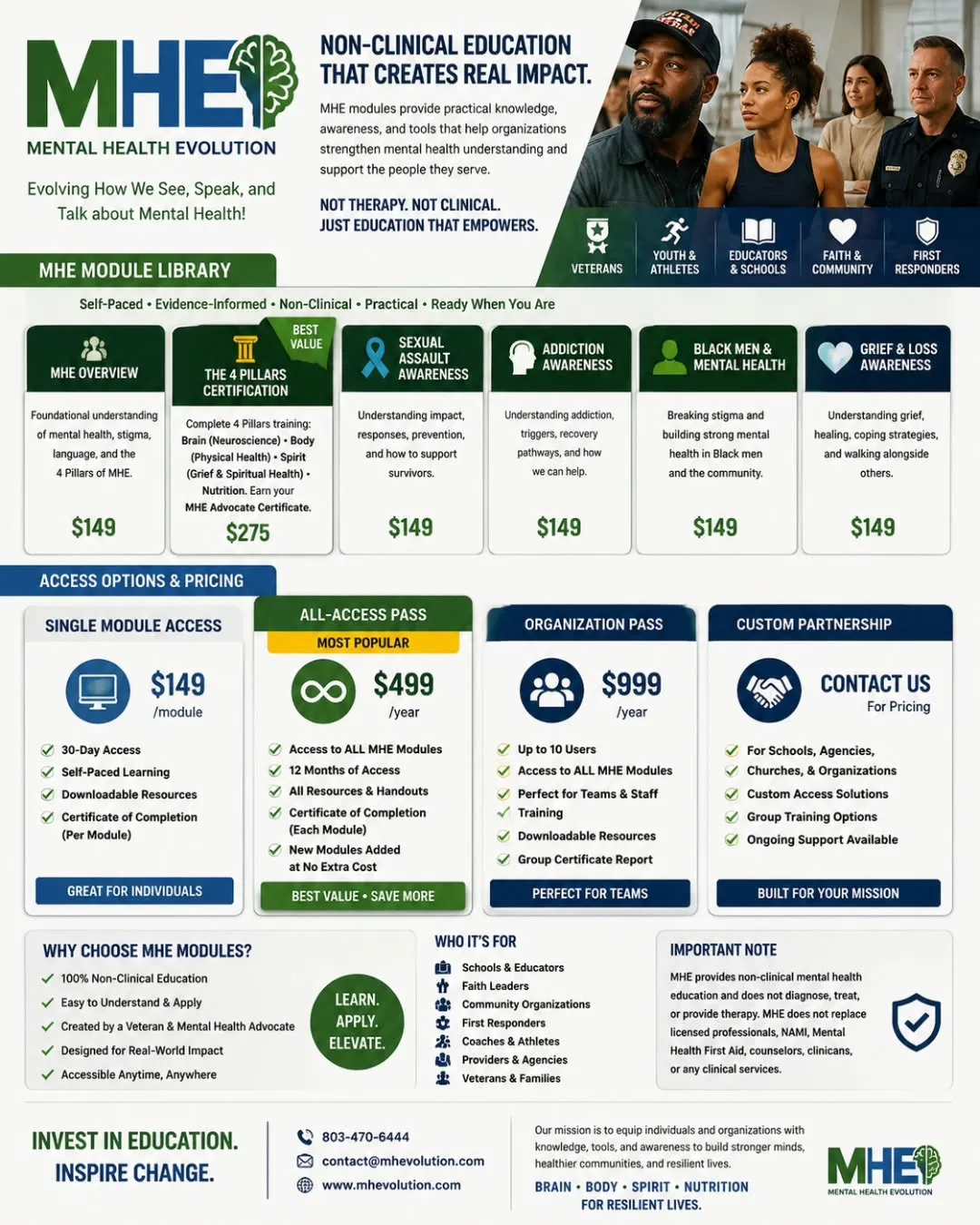
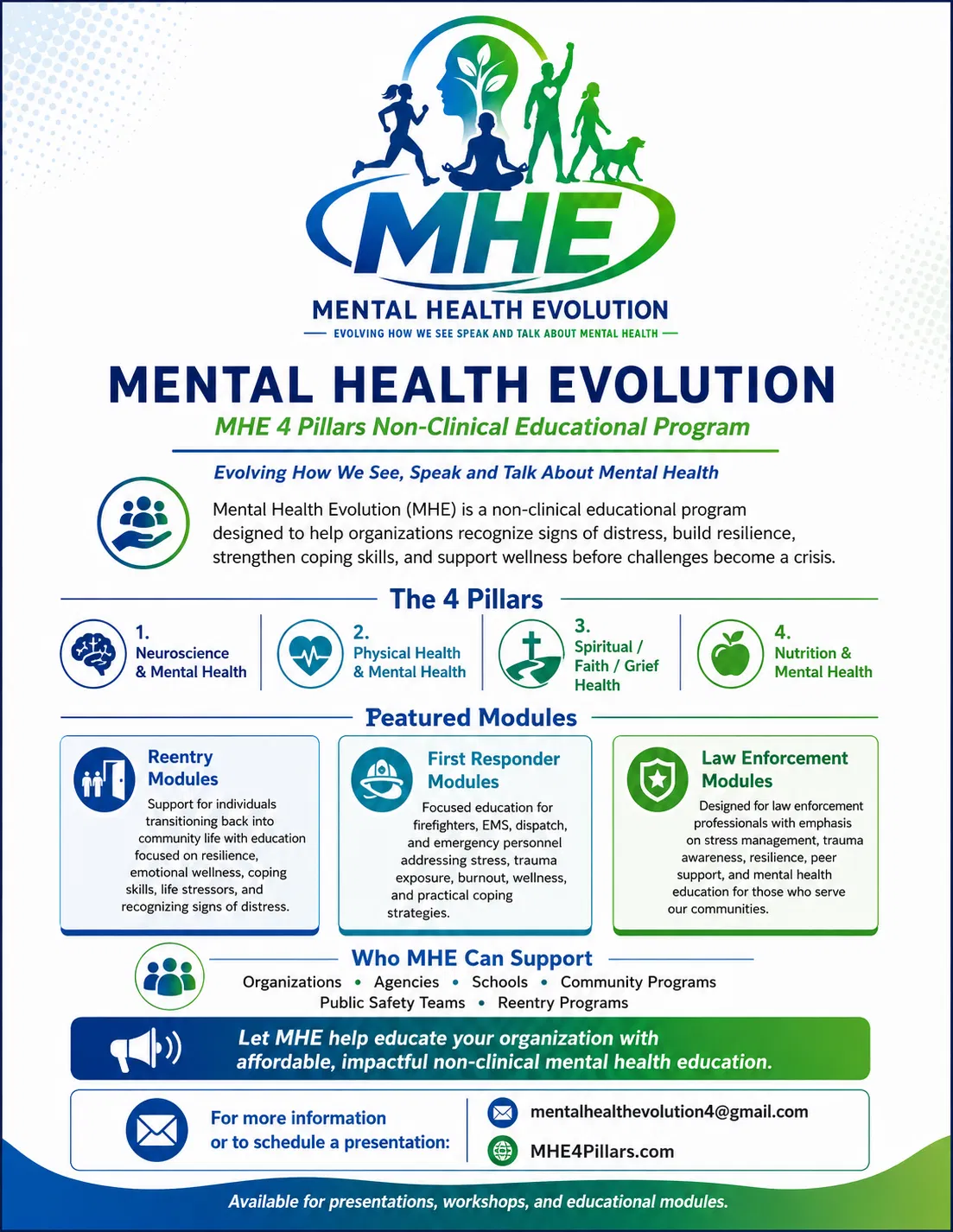
Mental Health Evolution 4 pillars non-clinical
Evolving How We See Speak and Talk About Mental Health



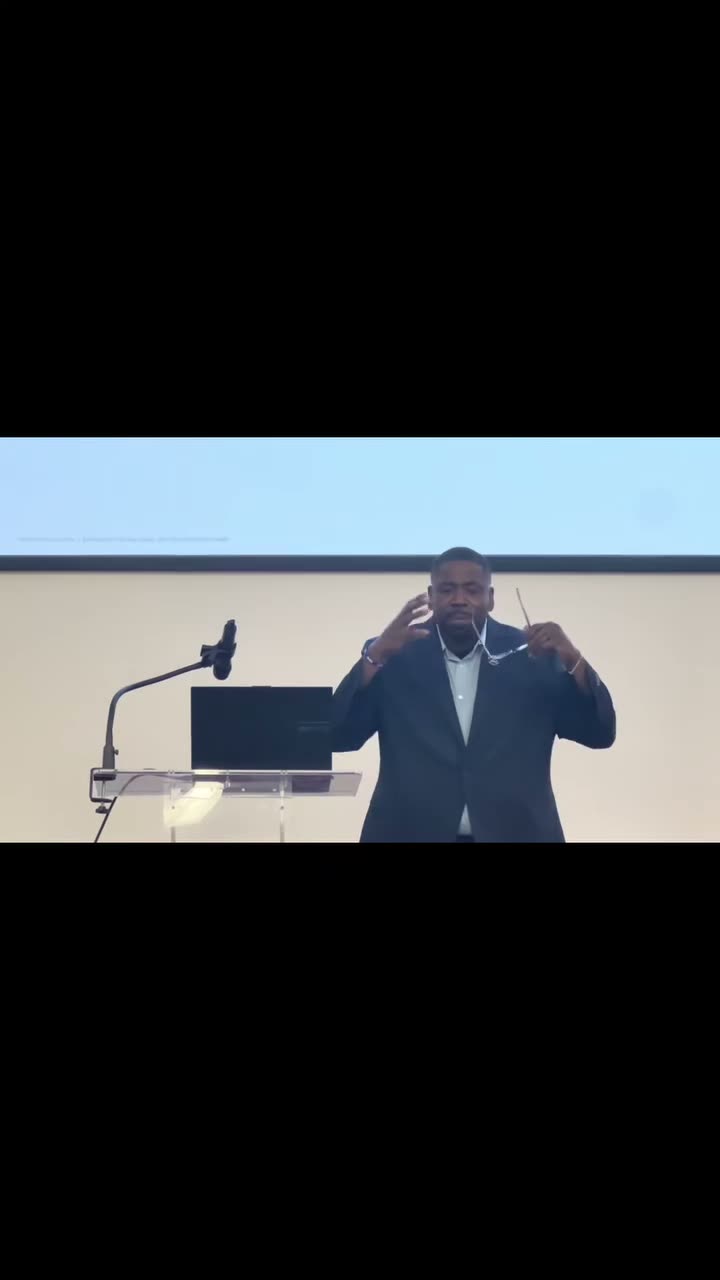
Founder & Creator, Mental Health Evolution (MHE) | Founder & CEO, Veterans Bridge Inc.
Terrance L. Randolph is a U.S. Army veteran, former law enforcement professional, mental health advocate, and Founder & CEO of Veterans Bridge Inc., a nonprofit organization dedicated to connecting veterans and their families with resources, benefits, support, and opportunities.
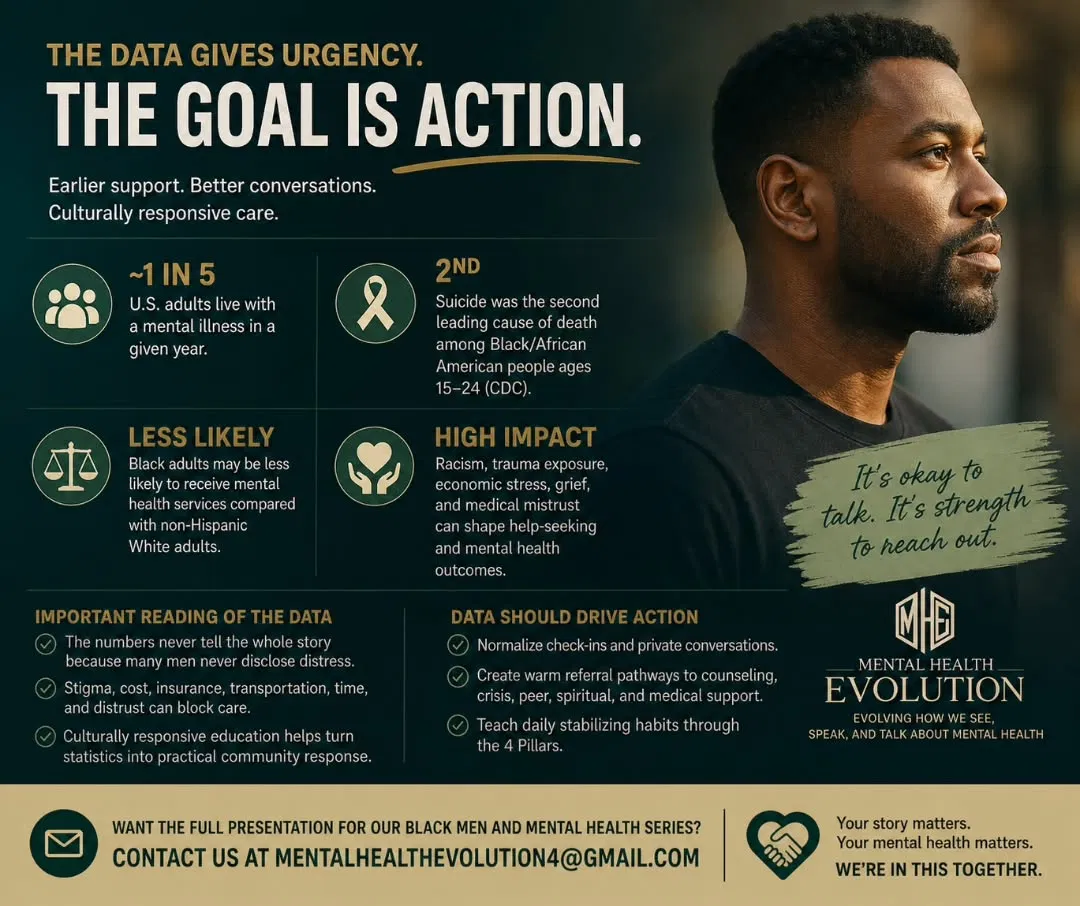
He is also the creator of Mental Health Evolution (MHE) – 4 Pillars Non-Clinical Mental Health Education, an educational initiative designed to help individuals and organizations recognize mental health challenges earlier, strengthen resilience, and better understand the connection between mental, physical, spiritual/grief, and nutritional well-being.
Terrance holds bachelor’s degrees in Sociology and Political Science, along with certifications in Neuroscience Coaching and Grief Coaching, and is pursuing a Master’s degree in Organizational Leadership. He previously served as an Outreach Coordinator with NAMI Piedmont Tri-County, supporting mental health education, outreach, and community engagement throughout the region.
Drawing from his military service, law enforcement experience, veteran advocacy, professional background, and personal experiences with grief and loss, Terrance created MHE with one central mission:
Helping evolve how we see, speak, and talk about mental health.
Through MHE and Veterans Bridge Inc., Terrance is committed to making practical, non-clinical mental health education more accessible to veterans, law enforcement, first responders, schools, workplaces, families, and communities—helping people recognize the signs of distress and connect with appropriate resources before challenges become crises.